
Ocean Microplastics Reached a Breaking Point
The ocean’s invisible enemy has finally been exposed, and the truth is more terrifying than anyone imagined. Microplastics in our oceans have reached a critical breaking point that threatens to collapse marine ecosystems as we know them. What scientists discovered in 2024 will change how you think about every piece of seafood on your plate forever.
The Hidden Crisis Beneath the Waves
Recent groundbreaking research has revealed that ocean microplastics pollution has reached catastrophic levels across all ocean depths. Scientists with support from the US National Science Foundation published findings that microplastics are now present from the surface to the deepest ocean trenches, with concentrations ranging from 10⁻⁴ to 10⁴ particles per cubic meter of seawater.
What are microplastics? These tiny plastic fragments, smaller than 5 millimeters, come from the breakdown of larger plastic items, synthetic clothing fibers, car tire wear, and countless everyday products. Unlike visible plastic pollution, microplastics are nearly invisible to the naked eye, making them the perfect stealth weapon against marine life.
The numbers are staggering. Every year, 9 to 14 million metric tons of plastic enter our oceans, and much of this eventually breaks down into microplastics. But here’s what will shock you: microplastics are now found in every single marine organismscientists have tested, from the tiniest plankton to the largest whales.
How Microplastics Affect Marine Life and Biodiversity
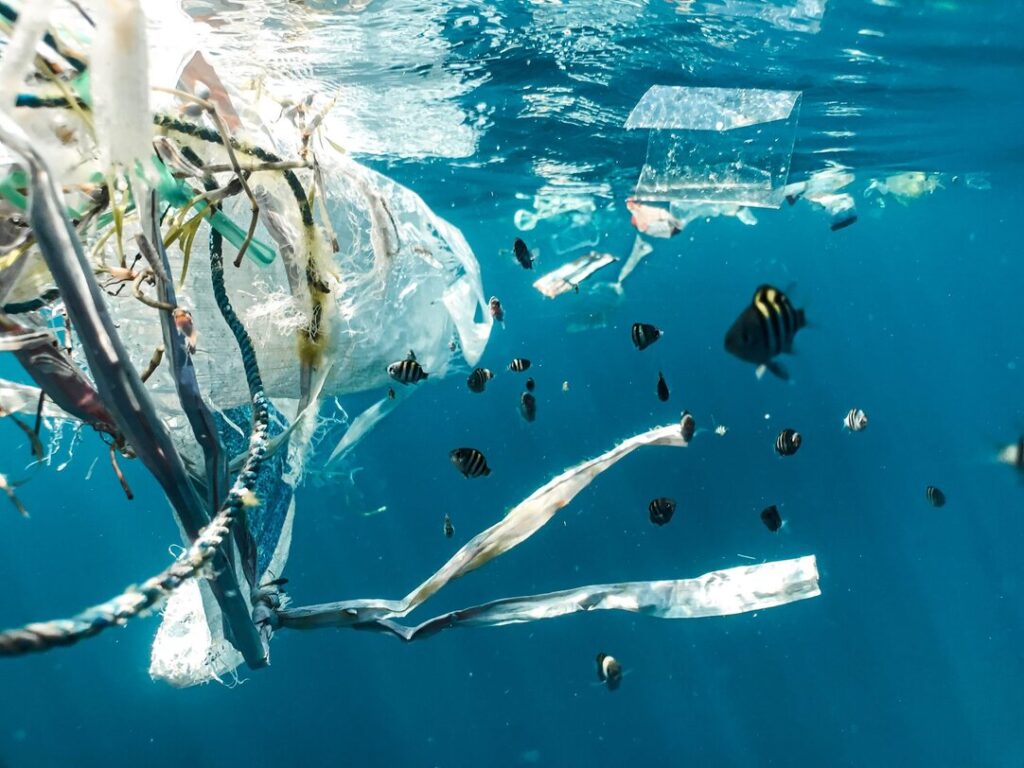
Marine animals struggle to survive in waters increasingly contaminated with plastic debris and microplastics
The impact on marine biodiversity is nothing short of catastrophic. Microplastics affecting fish and other marine animals occurs through multiple devastating pathways:
Direct Ingestion and Internal Damage
Marine animals mistake microplastics for food, leading to: – Blocked digestive systems – Reduced nutrient absorption – Internal injuries from sharp plastic fragments – Starvation as plastic fills stomachs without providing nutrition
Toxic Chemical Transfer
Microplastics act like tiny sponges, absorbing harmful chemicals from seawater including: – Heavy metals – Persistent organic pollutants (POPs) – Endocrine-disrupting chemicals – Carcinogenic compounds
When marine animals ingest these contaminated particles, these toxins are released directly into their tissues, causing organ damage, reproductive problems, and immune system suppression.
Bioaccumulation Through the Food Chain
Perhaps most alarming is how microplastics bioaccumulationworks its way up the food chain. Small fish eat contaminated plankton, larger fish eat the small fish, and humans eat the larger fish. Each step concentrates the plastic particles and associated toxins, creating a toxic time bomb in our seafood supply.
The Breaking Point: Why 2024 Changed Everything
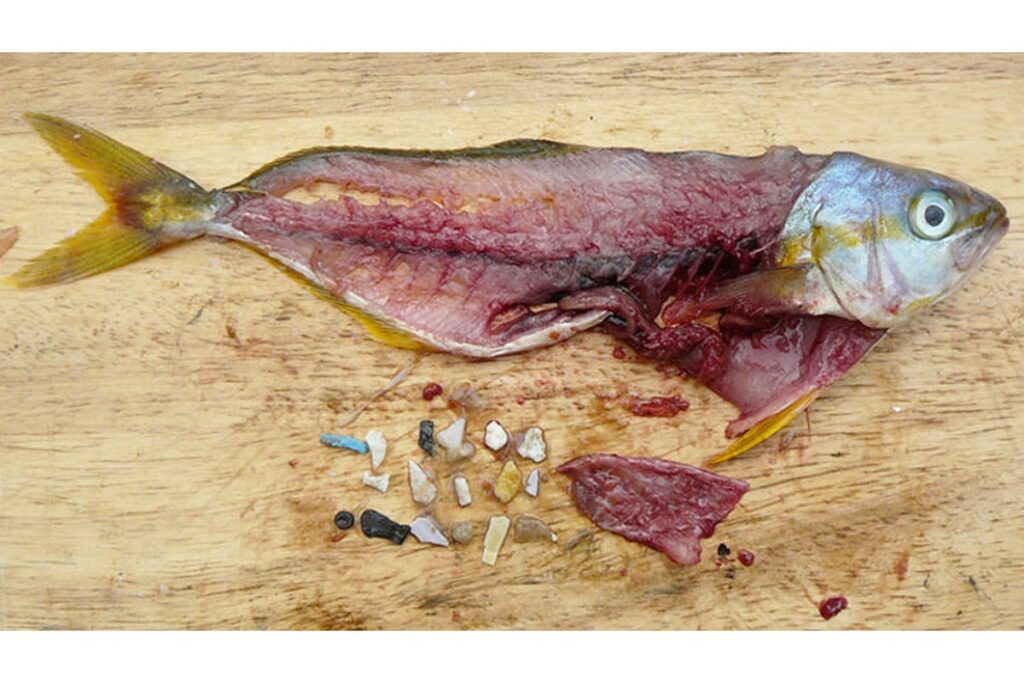
cientific studies reveal microplastics are now present in commonly consumed fish species worldwide
The year 2024 marked a turning point in our understanding of the microplastics crisis. Multiple studies revealed that we’ve crossed critical thresholds:
Unprecedented Ocean Contamination
New research shows that microplastics are everywhere in our oceans: – Found at all depths, from surface waters to ocean floor sediments – Present in Arctic ice and tropical coral reefs – Detected in the most remote ocean locations – Concentrations increasing exponentially year over year
Human Health Implications
For the first time, scientists have definitively linked ocean microplastics to human health problems. Living near an ocean polluted by microplastics may increase cardiometabolic disease risk, according to groundbreaking research published in 2024. Coastal communities with high ocean microplastic concentrations show increased rates of: – Heart disease – Diabetes – Metabolic disorders – Inflammatory conditions
Marine Ecosystem Collapse Indicators
Marine biologists are reporting alarming signs that ocean ecosystems are beginning to collapse under microplastic pressure: – Plankton populations declining in heavily contaminated areas – Fish reproductive rates dropping significantly – Coral reefs showing increased bleaching in microplastic hotspots – Marine food webs becoming increasingly unstable
What This Means for Your Health and Safety
The connection between ocean microplastics and human health is no longer theoretical‚Äîit’s a documented reality. Microplastics in humans are now found in: – Blood samples – Lung tissue – Placental tissue – Brain tissue – Digestive systems
The Seafood Safety Crisis
Every piece of seafood you consume likely contains microplastics. Studies have found microplastics in fish across all major commercial species: – Tuna – Salmon – Cod – Shrimp – Shellfish – Sardines
The question isn’t whether your seafood contains microplastics‚Äîit’s how much and what toxic chemicals they’re carrying.
Health Effects You Need to Know
Research indicates that microplastics health effects include: – Inflammation and immune system disruption – Hormonal imbalances – Potential cancer risk from associated chemicals – Cardiovascular problems – Neurological impacts
The Shocking Truth About Microplastic Sources
Understanding where microplastics come from reveals just how pervasive this problem has become:
Primary Sources
- Synthetic clothing: Every wash cycle releases millions of microfibers
- Car tires: Road wear creates massive amounts of microplastic particles
- Cosmetics and personal care products: Many still contain microbeads
- Industrial processes: Manufacturing releases countless plastic particles
Secondary Sources
- Plastic bottle breakdown: Even “safe” water bottles shed microplastics
- Food packaging degradation: Plastic containers constantly shed particles
- Fishing gear: Lost nets and equipment break down in ocean waters
- Landfill runoff: Improperly managed waste enters waterways
What’s Being Done (And Why It’s Not Enough)
Current efforts to address the microplastics crisis include: – Improved waste management systems – Development of biodegradable alternatives – Product bans on certain microplastic sources – Research into removal technologies
However, experts agree that these measures are insufficient given the scale and urgency of the problem. The crisis requires immediate, coordinated global action.
Lorem ipsum dolor sit amet, consectetur adipiscing elit. Ut elit tellus, luctus nec ullamcorper mattis, pulvinar dapibus leo.
How You Can Protect Yourself and Make a Difference
While the situation is dire, there are steps you can take to reduce your exposure and contribute to solutions:
Personal Protection Strategies
- Choose seafood wisely: Opt for smaller fish lower on the food chain
- Filter your water: Use filters certified to remove microplastics
- Reduce plastic use: Minimize single-use plastics in your daily life
- Wash synthetic clothes carefully: Use microfiber-catching devices
Supporting the Fight Against Ocean Microplastics
Organizations like ToxicSeafood.org are working tirelessly to raise awareness and fund critical research into microplastics solutions. By supporting research initiatives and advocacy efforts, you can help accelerate the development of technologies and policies needed to address this crisis.
Take action today by supporting ocean cleanup and microplastics research efforts. Every contribution helps fund the scientific research and technological innovations we desperately need to turn the tide on this environmental catastrophe.
The Future of Our Oceans Depends on Action Now
The microplastics crisis has reached a breaking point, but it’s not too late to act. The shocking reality is that without immediate, coordinated global action, we face the collapse of marine ecosystems and a seafood supply chain so contaminated it poses serious health risks to billions of people.
The choice is ours: continue on the current path toward ecological disaster, or take decisive action to address the microplastics crisis before it’s too late. The health of our oceans, marine life, and our own families depends on the decisions we make today.
The breaking point has been reached. What happens next is up to all of us.
For more information about microplastics in seafood and ocean pollution, visit ToxicSeafood.org. Support critical research and cleanup efforts by contributing to our GoFundMe campaign.
References
[1] National Science Foundation. “Researchers discover microplastics at all ocean depths.” June 16, 2025. https://www.nsf.gov/news/researchers-discover-microplastics-all-ocean-depths
[2] Nature. “The distribution of subsurface microplastics in the ocean.” April 30, 2025. https://www.nature.com/articles/s41586-025-08818-1
[3] American Heart Association. “Living near an ocean polluted by microplastics may increase cardiometabolic disease risk.” June 18, 2025. https://newsroom.heart.org/news/living-near-an-ocean-polluted-by-microplastics-may-increase-cardiometabolic-disease-risk
[4] Mongabay. “The plastics crisis is now a global human health crisis, experts say.” November 19, 2024. https://news.mongabay.com/2024/11/the-plastics-crisis-is-now-a-global-human-health-crisis-experts-say/
[5] Science Daily. “‘Scratching’ more than the ocean’s surface to map global microplastic pollution.” April 30, 2025. https://www.sciencedaily.com/releases/2025/04/250430141835.htm
[6] Plastic Pollution Coalition. “How Microplastics are Changing the Oceans.” June 26, 2025. https://www.plasticpollutioncoalition.org/blog/2025/6/26/how-microplastics-are-changing-the-oce